A Grocery-Anchored Parking Field Where Safety and Rebates Were Designed In Together
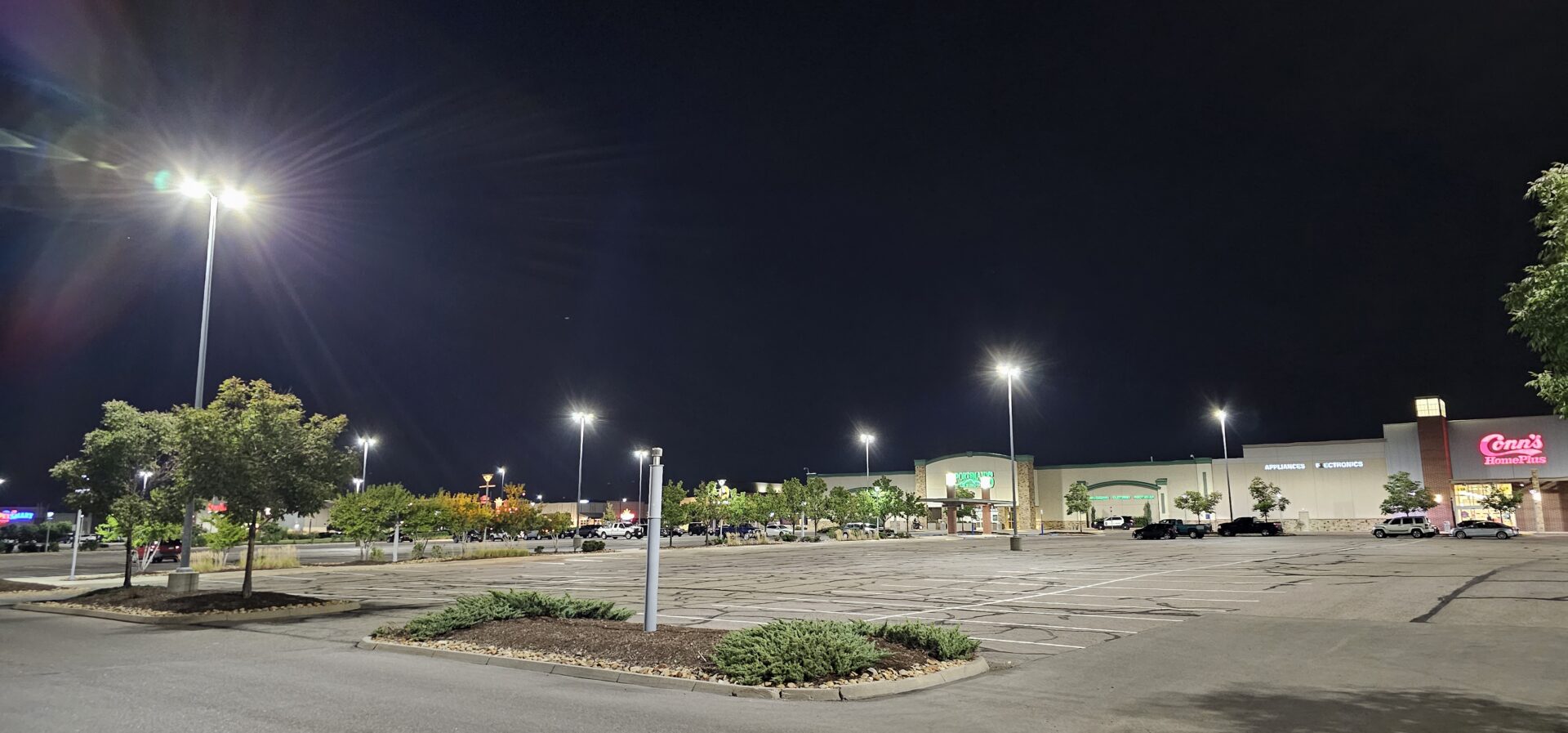
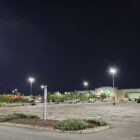
A grocery-anchored parking field works longer hours than almost any other retail asset, from early deliveries to late-night shoppers. This project delivered uniform light across the full field, designed zone by zone against footcandle and uniformity requirements, with utility rebate capture managed as part of the project rather than an afterthought.
The parking lot lighting survey and photometric design came first, the incentive paperwork ran alongside, and the owner captured the rebate value without chasing it. The field now has no dark gaps between fixture zones, and the numbers behind that statement are documented.
The Situation
The safety case for getting a grocery parking field right is well documented. The U.S. Department of Justice identifies parking lots as the third most common location for crime, accounting for 4 to 6 percent of all crimes and 7.3 percent of violent crimes.
A systematic review of decades of evaluation research puts the average crime reduction from improved lighting at approximately 20 percent, and well-lit lots specifically experience an average of 27 percent fewer car break-ins and 38 percent less theft than poorly lit ones.
The commercial case is just as direct. Women control or influence 85 percent of consumer spending and are 86 percent more likely to bypass a dark parking area for a better-lit one.
For a grocery anchor whose business depends on repeat visits at all hours, the parking field is not a cost center. It is part of what fills the store, and it is competing with the lot across the street every evening.
The Design Work
Survey and photometric design
The work followed OSL's standard sequence. A parking lot lighting survey documented the existing system and measured what it was delivering, fixture by fixture.
The photometric design then established targets zone by zone: the parking field, cart corrals and pedestrian routes, the storefront approach, the drive aisles, and the perimeter each carry distinct requirements that a single site-wide average does not capture.
Uniformity ratios were held throughout, because the industry standard specifies a maximum of 4:1 for general parking areas and 3:1 for higher-security applications, and a field can meet its average while failing exactly where shoppers walk.
There is an efficiency dividend in that discipline. Field research from the Lighting Research Center at Rensselaer Polytechnic Institute demonstrated energy savings of up to 75 percent when uniformity was prioritized over raw brightness, because even light at moderate levels outperforms bright-and-patchy on both perception and consumption.
Fixtures were selected from across manufacturers to meet each zone's requirement, with maintained illumination calculated so the design still meets its targets at the end of the maintenance cycle, not just at installation.
Rebate capture, engineered in from the start
Commercial lighting rebate capture ran alongside the design rather than after it, and the sequence is the whole game. Pre-approval was filed before installation began, which is the step that most commonly costs owners their incentive when it is missed, because most utility programs will not pay for work that started before approval.
Every specified fixture was confirmed against the DLC Qualified Products List, which 75 percent of North American utility programs require for eligibility.
The timing favors owners right now. Average prescriptive lighting incentives rose about 17 percent in 2026, with outdoor categories up 30 percent or more, and LED-to-LED replacement eligibility has expanded to 22 percent more utility programs, which matters for centers that upgraded once a decade ago and are due again.
With incentives captured, projects like this typically pay back in one to four years.
The Outcome
- The field now carries uniform light across every row and pedestrian route, documented in point-by-point photometric calculations the owner keeps.
- The rebate file, the as-built records, and the specification travel with the property, which means the next capital cycle starts from a record instead of a guess.
- And the nightly result is the one shoppers notice without knowing why: a lot that reads as safe from the street, at 6 a.m. and at 11 p.m., every day of the week.
We offer a free project review
If your center's parking field is due for an upgrade, the rebate window is worth checking before you start rather than after.
Click at Start Here or reach Marshall at 763-682-7114