What Is a Commercial Lighting Survey and Do You Need One Before an LED Upgrade?
A commercial lighting survey is a documented, fixture-by-fixture assessment of a property's existing lighting system: what is installed, where, at what wattage, in what condition, on which circuits, and what light it is actually delivering, confirmed with measurements.
If you are planning an LED upgrade, the survey is the step that makes every other step accountable, because the design needs an accurate starting point, the utility rebate needs a documented baseline, and the owner needs a record that outlives the project.
The short answer to the title question is yes, and the better question is what the survey should include so you only pay for it once.
What a Commercial Lighting Survey Documents
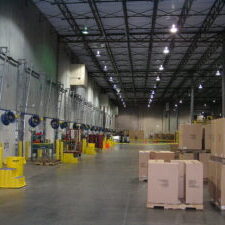
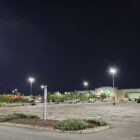
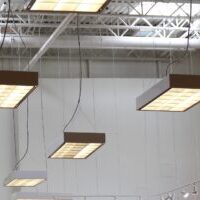
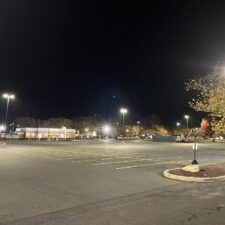
A complete site lighting assessment covers four layers. The inventory: every fixture by type, count, wattage, mounting height, and location, across parking fields, drive aisles, pedestrian routes, building entries, and perimeter areas.
The condition: fixture age, visible degradation, failures, and the maintenance patterns behind them. The infrastructure: the poles, circuits, and electrical capacity feeding the system, which determine what a retrofit can reuse. And the performance: measured light levels across each zone, because a survey without measurement is a fixture count, and a fixture count cannot tell you whether the site meets its requirements.
The measurement layer is where surveys earn their keep. A site can look adequately lit and fail its uniformity requirements between poles, and it can look dim while meeting code in every zone. Measured footcandle readings replace impressions with facts, and facts are what capital decisions, code questions, and rebate applications all require.
Why the Survey Comes Before the LED Upgrade
The design needs a true starting point
An LED upgrade designed from assumptions inherits every error in them. The survey establishes what exists and what the site actually requires, which lets the photometric design reuse poles and circuits where they serve, right-size what replaces the rest, and document the reasoning. Retrofit designs built on measured baselines are the ones that survive permitting, bidding, and the owner's own scrutiny.
The rebate needs a documented baseline
Utility incentive programs calculate savings against the existing system, and they expect documentation of it. A survey that records existing fixtures, wattages, and operating profiles is the baseline evidence a rebate application is built on. Skip the survey and the incentive paperwork starts from guesswork, which is one of the quiet ways eligible projects end up unpaid.
The owner needs a record that outlives the project
The survey produces as-built lighting documentation the property keeps: the inventory, the measurements, and the conditions at a point in time. That record supports maintenance planning, insurance and code questions, tenant negotiations, and the next capital cycle. For portfolio owners, standardized surveys across sites create the comparable baseline that makes portfolio-wide decisions possible, because sites surveyed the same way can finally be compared like to like.
What to Expect From a Professional Survey Process
OSL runs surveys with the same discipline as our designs, because the survey is the foundation the design stands on. Field teams document the site fixture by fixture, measure light levels by zone, and record the electrical infrastructure.
The deliverable is a structured report the owner can act on: the inventory, the measured performance against applicable requirements, and the condition findings that shape what comes next.
On multi-site portfolios, the same process runs at every property in the same format, and the result is a portfolio lighting assessment rather than a stack of unrelated reports. We have been building these baselines since 2001, across more than 7,200 projects.
If your upgrade planning is starting from an old spreadsheet and memory, start with the survey instead.