Survey First, Then Design, for an Auditorium’s Event-Night Lighting
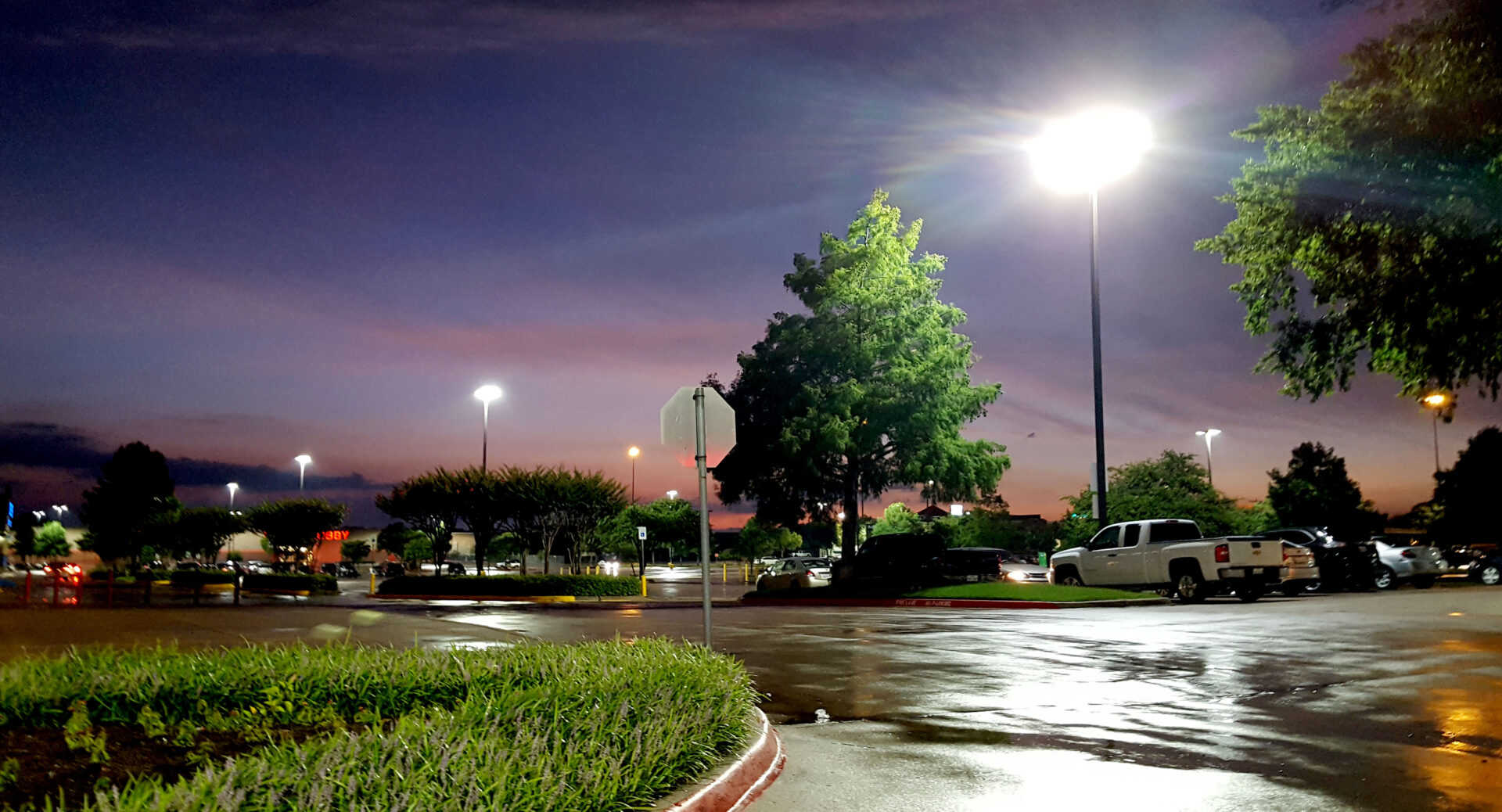
This auditorium's exterior lighting had grown the way campus lighting usually grows: a few fixtures at a time, over many years, from whoever was available when something failed.
Before anything could be improved, someone had to establish what was actually there. OSL started with a commercial lighting site survey, documenting the existing system fixture by fixture and measuring what it delivered, then built the design from that measured baseline.
Event nights now run under one lighting standard, from the parking areas through the walkways to the entries, and the facility holds as-built documentation that will serve it for years.
The Situation
Campus and institutional properties accumulate lighting decisions the way they accumulate everything else: gradually, under different budgets, by different hands. A fixture fails and gets replaced with whatever the contractor has on the truck.
A walkway gets added and lit as an afterthought. A decade later, the site runs a mix of fixture types, wattages, and color temperatures, and nobody on the current facilities team was present when most of it went in.
The practical problem is that you cannot design your way out of a condition you cannot describe. Without an accurate record of the existing system, every improvement conversation runs on impressions: this corner feels dark, that lot seems fine.
Impressions are not a basis for capital decisions, and they are certainly not a basis for demonstrating code compliance. What the facility needed first was not fixtures. It was facts.
The Design Work
The existing lighting audit
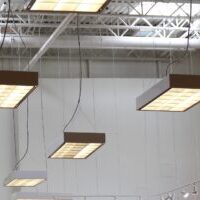
Our field team documented every fixture on the site: type, wattage, mounting height, pole location, condition, and the circuit feeding it.
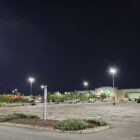
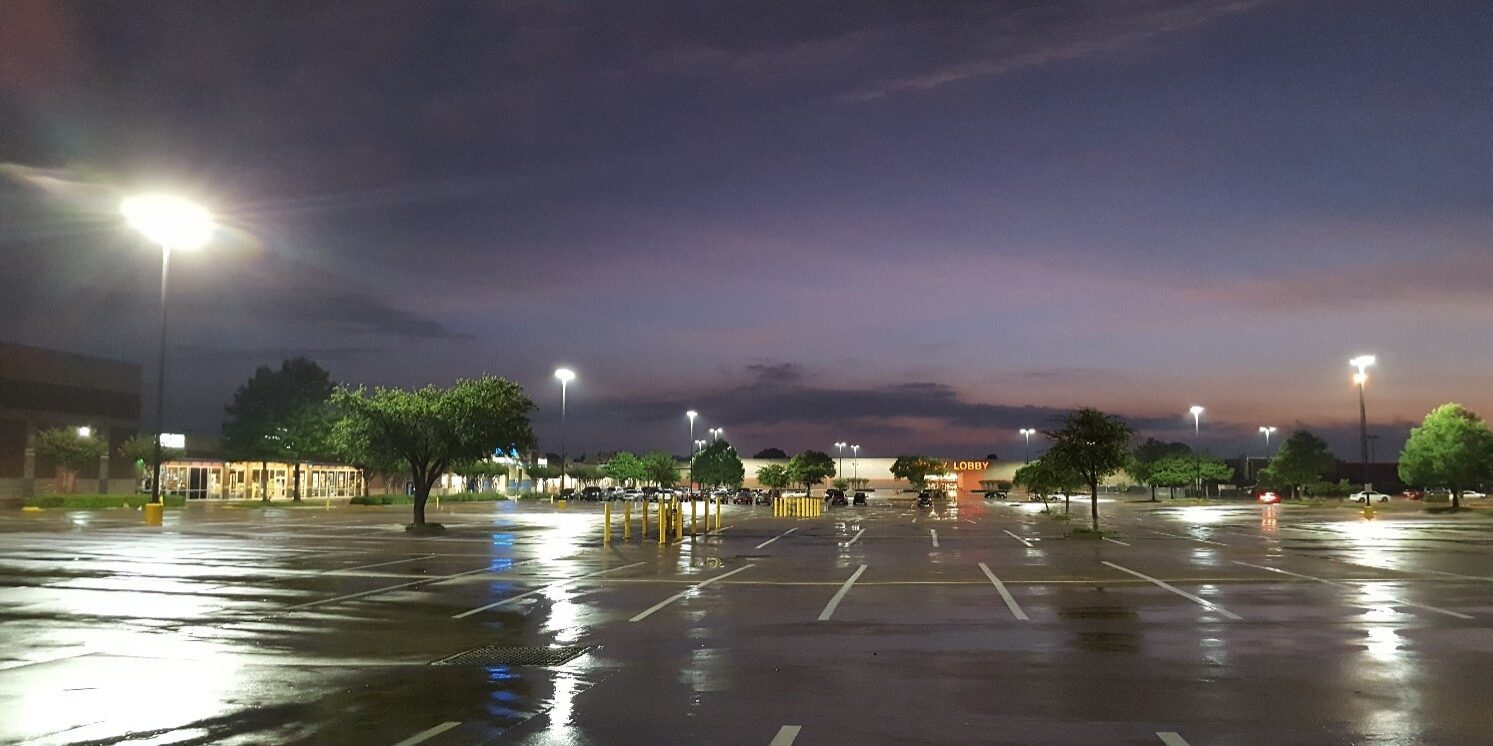
The lighting fixture inventory survey covered the parking areas, pedestrian routes, building approaches, and perimeter, along with the electrical infrastructure behind them.
Measured light levels were recorded across each zone, so the survey captured not just what was installed but what it was actually delivering.
The audit is what turns opinions about the lighting into facts about the lighting. Areas that felt dark were confirmed dark with measurements.
Areas that felt adequate sometimes were not, because a site can meet its average light level while uniformity fails between fixtures, and the industry standard specifies a maximum uniformity ratio of 4:1 for general parking areas and 3:1 for higher-security applications.
A design that meets its average while failing its ratio is not compliant, and only measurement reveals the difference.

Design from a measured baseline
The design established footcandle targets and uniformity ratios zone by zone, then selected fixtures against those requirements from across the field of manufacturers. Because OSL is manufacturing-agnostic, nothing in the specification was driven by a catalog.
Where existing poles and circuits could serve the new design, they stayed, which is the kind of cost discipline that only a measured baseline makes possible. Code compliance was built in rather than added later, with the design written to pass review the first time.
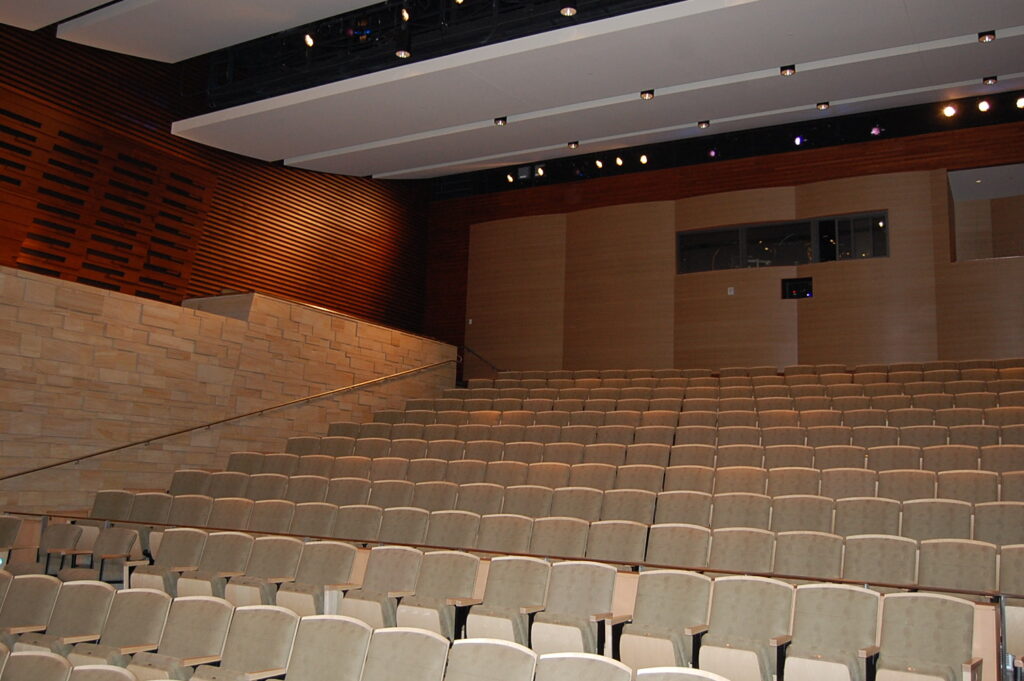
Venues that host evening events carry the same after-dark responsibility whether the marquee says concert, lecture, or graduation. Arrivals and departures compress hundreds of people into short windows, and the site needs to hold consistent, uniform light through all of it, on routes that many attendees walk only a few times a year.
The Outcome
Event nights now run under one standard. The parking areas, walkways, and entries hold their targets, the mix of accumulated fixture types is gone, and the site reads as one facility under one consistent character of light.
Just as valuable is what the facility now owns on paper: as-built lighting documentation, photometric calculations, and a specification written to performance parameters.
That documentation supports maintenance planning, budget requests, code questions, and any future expansion, because the next project on this campus starts from a record instead of a blank page.
We offer a free project review
If nobody on your team can say exactly what fixtures your site is running, the survey is the place to start, and it is worth doing before the next failure forces the question.
Click at Start Here or reach Marshall at 763-682-7114.