Exterior Lighting for a Concert Hall That Fills After Dark
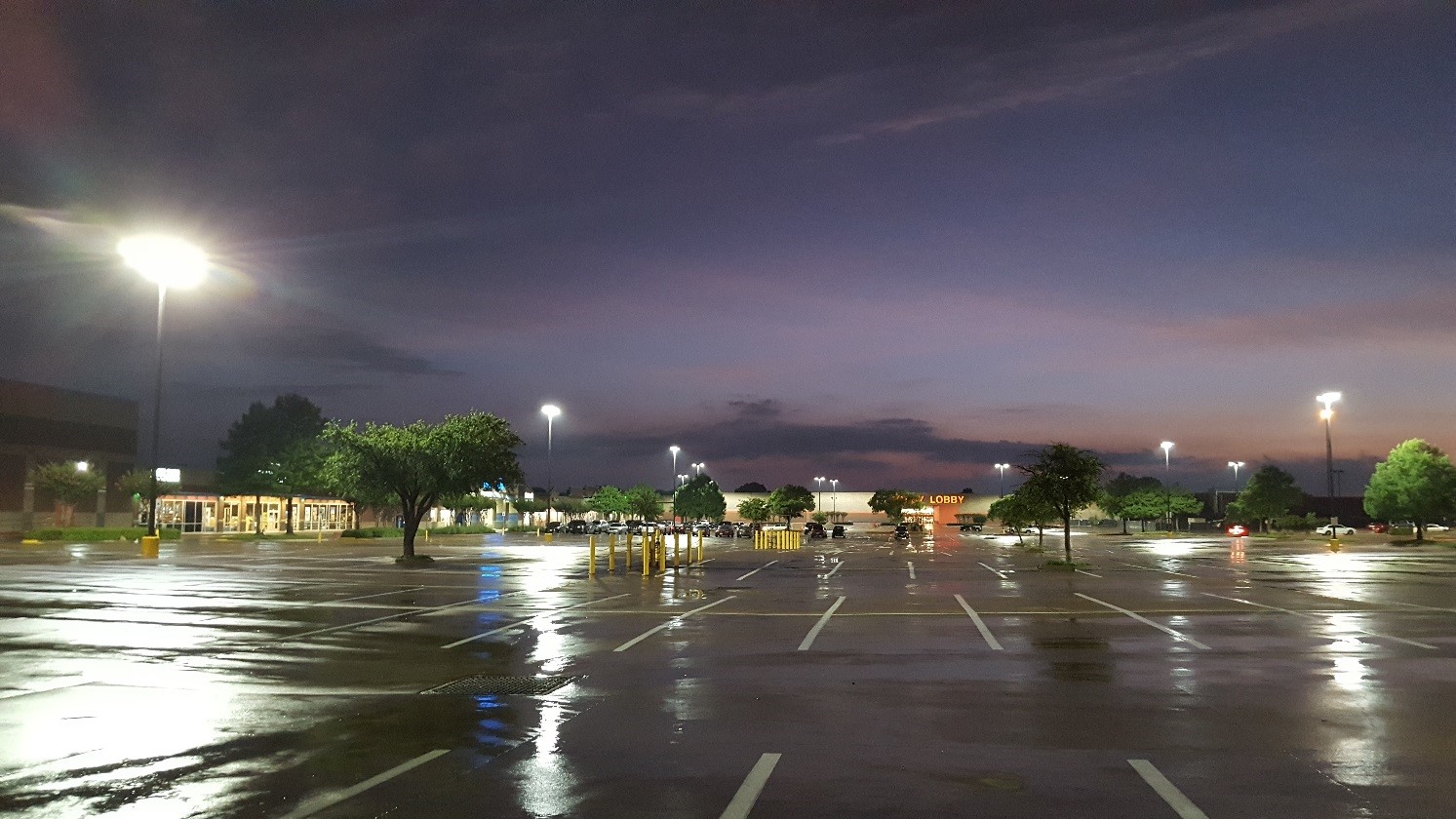
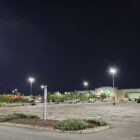
A concert hall does almost all of its business at night. Patrons arrive in the dark, walk from parking to the entry in the dark, and form their impression of the venue before they reach the doors.
This exterior site lighting design treated the arrival experience as the project: pedestrian routes lit to hold uniform light levels, entries that read clearly from across the site, illumination that supports security camera coverage during the busiest windows, and a consistent color temperature that lets the architecture carry the evening.
The venue looks like somewhere worth dressing up for, and the walk in feels as considered as the hall itself.
The Situation
An event venue concentrates its risk into a few short windows: the hour before the show and the half hour after. Hundreds of people cross the site at once, many of them unfamiliar with the property, moving between vehicles and entries in the dark.
Some are older patrons managing steps and grade changes. Some are distracted, reading tickets and phones. All of them are the venue's responsibility from the moment they leave their cars.
That pattern makes an event venue different from a typical commercial site. A retail center's traffic spreads across the day. A venue's traffic arrives in surges, after dark, on a predictable schedule. The lighting either performs during those windows or the venue carries the exposure.
And when an incident does occur in a parking area, the standard of care question is whether the property had documented evidence that the site met applicable code requirements at the time. Documentation is the defense, and it only exists if the design was engineered in the first place.
The Design Work
Zone-by-zone photometric analysis
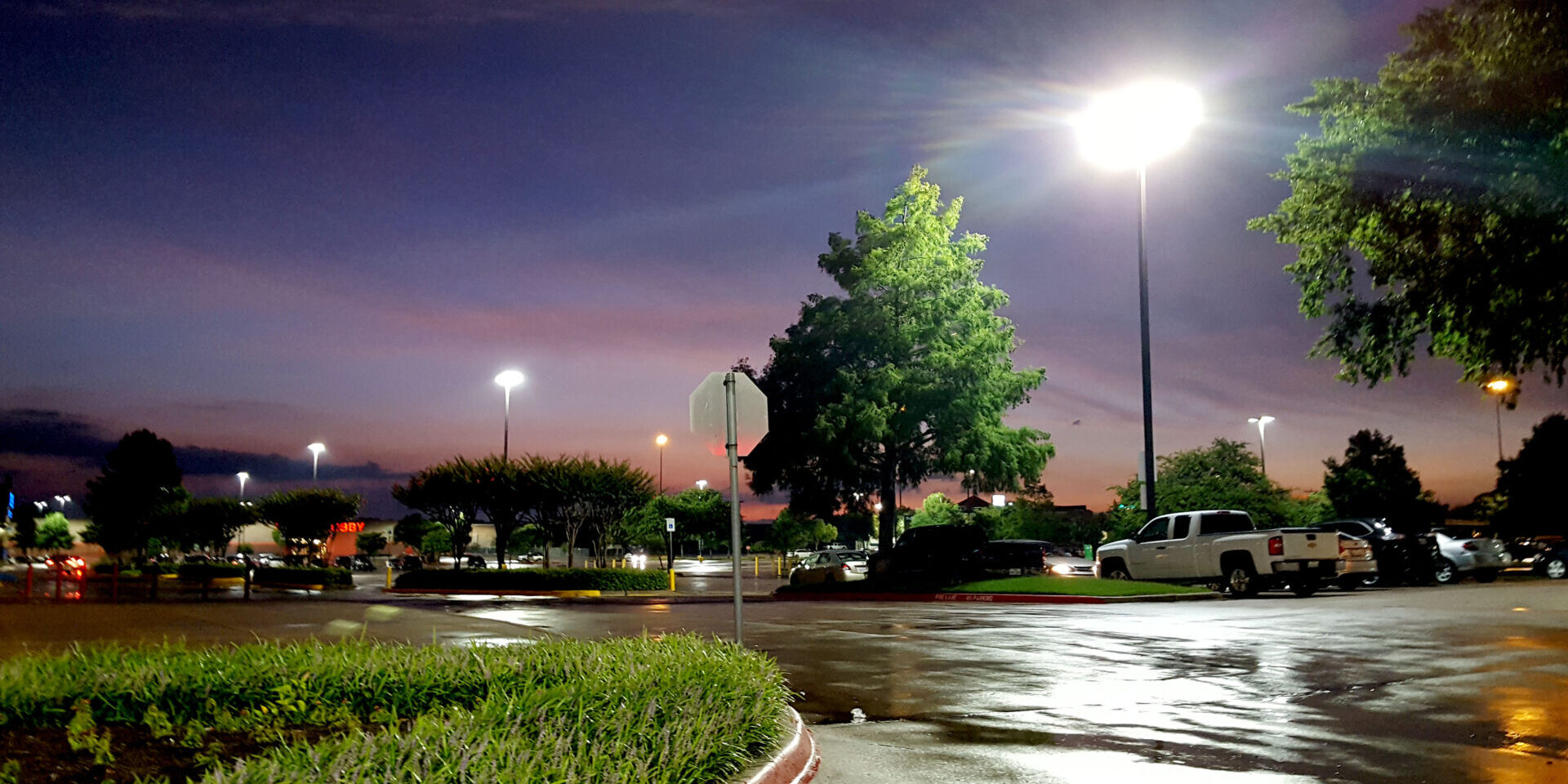
OSL modeled the site zone by zone using professional photometric software: the approach drives, the parking areas, the pedestrian routes, the entry plaza, and the perimeter each carry their own footcandle targets and uniformity ratios.
This is a point-by-point calculation, not a general estimate, and it produces defensible photometric documentation the venue can stand behind for permitting and for its own records.
Uniformity received particular attention, because it is the measure that matters most in surge conditions. Uniformity ratio is the relationship between the brightest and darkest points on the same surface.
A site can meet its average footcandle target while still harboring dark zones at crossings and between poles, and research in lighting design has established that uniformity is often more important to perceived safety than raw light levels. For a venue, perceived safety is part of the product. A patron who feels safe walking in buys the next ticket.

Designed for the cameras as well as the eyes
Venue security depends on camera coverage during exactly the windows when the site is busiest.
The specification decisions that affect photometric uniformity also directly affect the quality of evidence a camera system can capture, so light levels and color rendering were planned with the camera positions in mind rather than left to chance.
Color temperature as an architectural decision
The design also had an aesthetic job to do. A performance venue has an after-dark presence to protect, and that presence depends on coherence.
The specification held one consistent color temperature across parking, walkways, and the building approach, so the site reads as a single composed environment rather than a patchwork of fixtures installed at different times.
Site-wide CCT coherence is a design standard, not a cosmetic preference. CCT compliance was verified against the local ordinance as part of the design, because a growing number of municipalities now regulate outdoor color temperature directly, and full-cutoff optics keep the venue's light on the venue's site instead of spilling into the surrounding neighborhood.
The Outcome
The venue's arrival experience now matches what happens inside. Pedestrian routes hold uniform light from parking to entry, the plaza reads clearly from across the site, and the architecture carries the evening under one consistent temperature of light.
Because the fixtures were selected from across the field of manufacturers against maintained illumination calculations, the design meets its targets at the end of the maintenance cycle, not just on opening night.
LED output depreciates over years of operation, and a design that only works when the fixtures are new is a design that quietly fails on schedule.
We offer a free project review
The venue also holds the documentation: photometric drawings, zone calculations, and a specification written to performance parameters that will serve any future expansion of the site.
If your venue's arrival experience does not match your program, the gap is usually in the site lighting.
Click at Start Here or reach Marshall at 763-682-7114.