2027 Outdoor Lighting Design Trends
Most trend lists are written to sell fixtures. This one is written to help commercial property owners plan capital.
Six shifts will shape outdoor lighting decisions in 2027: the first generation of commercial LED installations reaching end of life at scale, utility rebates expanding to cover LED-to-LED replacement, networked controls moving from option to expectation, municipal color temperature and Dark Sky ordinances spreading, EV infrastructure changing site electrical planning, and the continued move from raw brightness toward engineered uniformity.
Each one has a planning implication, and several have deadlines.

1. The First-Generation LED Replacement Wave Arrives
The LED conversions installed between roughly 2010 and 2016 are reaching the end of their performance life, an estimated 7.3 billion square feet of commercial space. Output has depreciated, drivers are failing, and the products themselves are long discontinued.
In 2027 this stops being a forecast and becomes a line item. Owners who survey those sites now, before failures force the timing, will plan the re-retrofit on their own schedule instead of the fixtures' schedule.
2. Rebates Now Pay for LED-to-LED, and the Window Is Open
The rebate landscape moved in owners' favor: average prescriptive lighting incentives rose about 17 percent in 2026, outdoor categories rose 30 percent or more, and LED-to-LED replacement eligibility expanded to 22 percent more utility programs.
One deadline matters for 2027 planning: the Design Lights Consortium's SSL V6.0 technical requirements will delist non-compliant products, and utility programs that require DLC listing, which is 75 percent of programs in North America, will follow the list.
Specifying against the current QPL and filing pre-approval before installation is what protects the incentive.
3. Networked Controls Become the Default Expectation
Networked lighting controls are increasingly specified as part of ground-up outdoor designs, not as an add-on but as a performance layer.
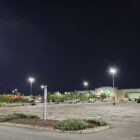
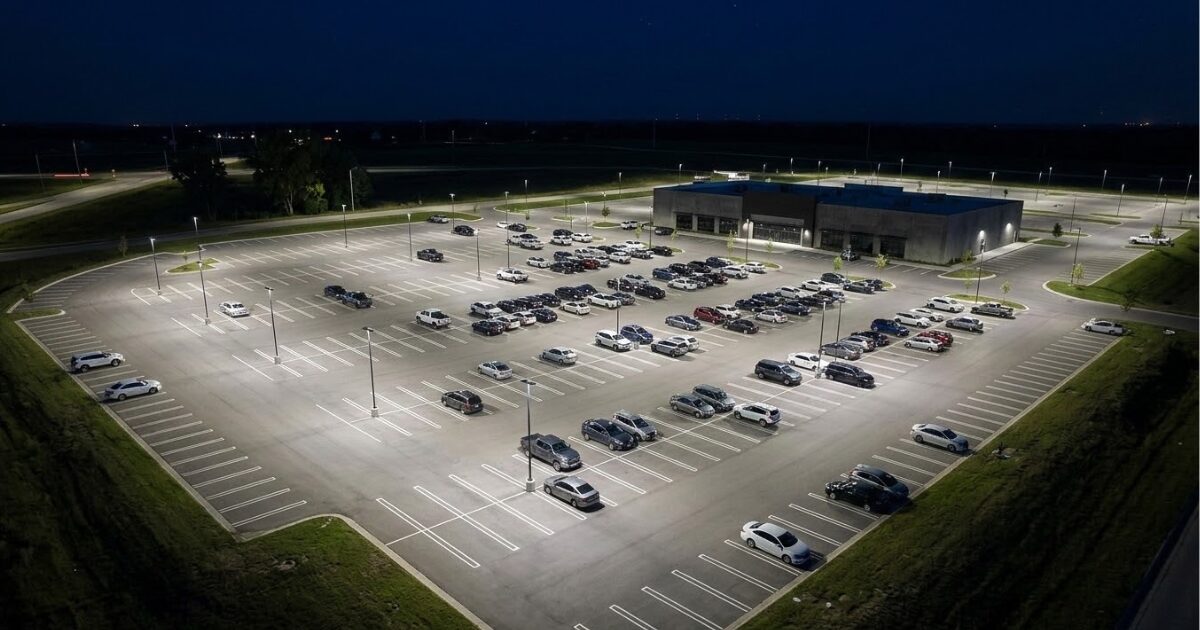
For large parking fields where walking every pole is not practical, remote monitoring enables proactive maintenance instead of complaint-driven response, and scheduling and dimming capture energy savings that static systems leave on the table.
In 2027 the question shifts from whether to include controls to whether the design planned for them
4. Municipal CCT and Dark Sky Ordinances Keep Spreading
A growing number of municipalities now regulate outdoor color temperature directly, and Dark Sky ordinance adoption continues to expand.
Full-cutoff fixtures that direct all light below the horizontal plane deliver more usable light per watt to the task plane, so a properly designed full-cutoff installation typically performs better on every measurable dimension while meeting the ordinance.
Designing for compliance from the start, with light trespass calculations at the property line, is cheaper than retrofitting for it after a citation.
5. EV Charging Changes the Electrical Plan Under the Parking Lot
EV charging infrastructure shares conduit routes, circuit capacity, and trenching with site lighting. Owners planning charging in the next capital cycle can address conduit routing and circuit capacity at the lighting design stage, eliminating costly field modifications later.
In 2027, a lighting design that ignores the site's EV horizon is leaving money in the pavement.
6. Uniformity Keeps Beating Brightness
The research continues to point one direction: uniformity is often more important to perceived safety than raw light levels, and prioritizing uniformity enables substantial energy reductions, up to 75 percent in Lighting Research Center field studies, compared to bright-and-patchy designs.
Camera systems benefit for the same reason, because uniform light produces usable footage across the frame. Expect specifications, and litigation discovery, to keep tightening around uniformity ratios rather than averages.
The right first step is a survey of what you have
If any of these six intersect with your 2027 capital plan, we offer a free project review.
Click at Start Here or reach Marshall at 763-682-7114.