Your Lighting Spec Is a Portfolio Asset. Is It Built Like One?
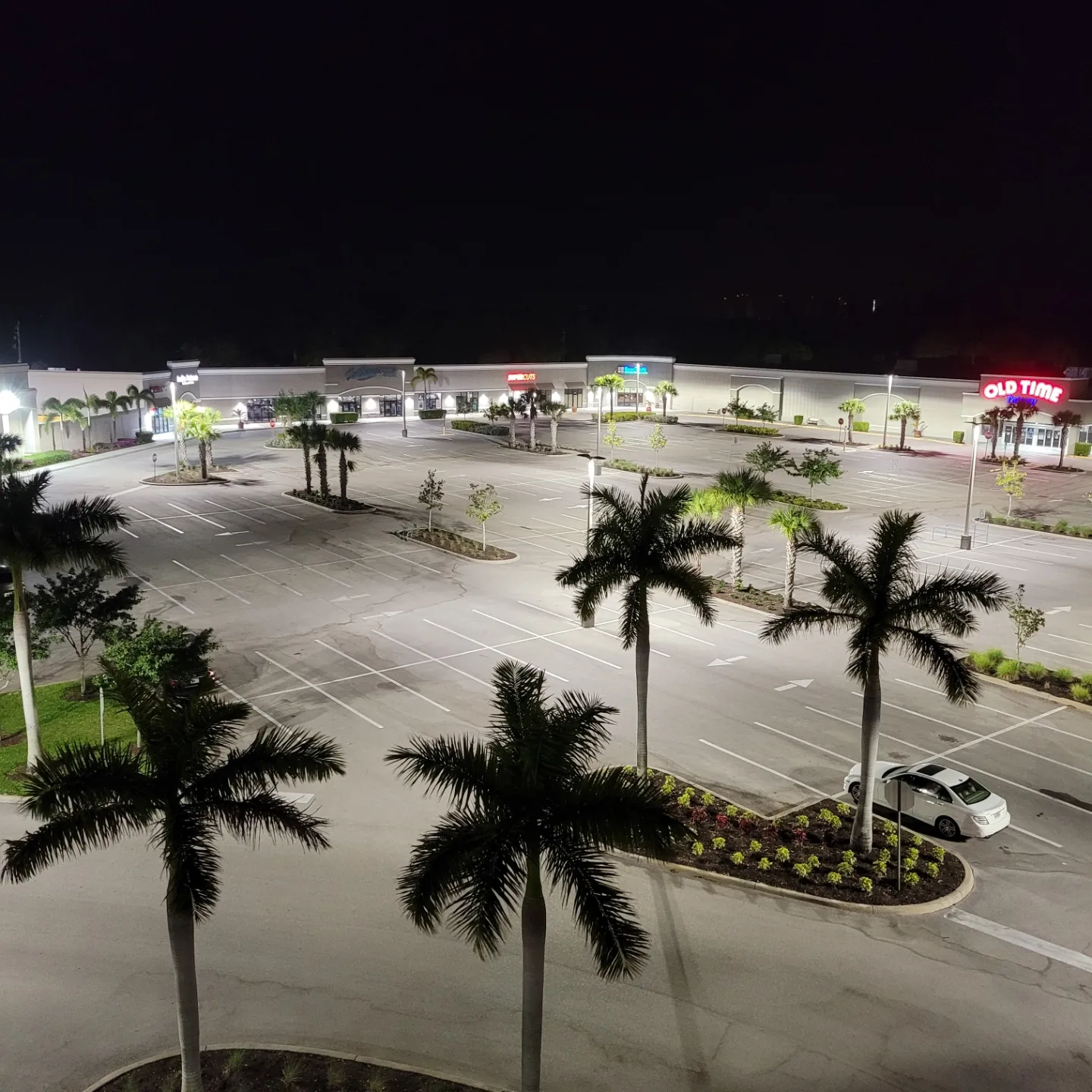
The question comes up in almost every portfolio review. Someone needs to see the lighting documentation for a group of properties. What comes back is usually a collection of vendor proposals, fixture cut sheets from different manufacturers, and in some cases nothing at all, just an invoice and a date. No consistent specification. No shared standard. No way to compare performance across sites, benchmark maintenance costs, or answer what every risk manager eventually asks: does this property meet code, and can you prove it?
This is not a documentation problem. It is a design problem, specifically a sequencing problem that compounds quietly across every project until a capital event, an incident, or a lease negotiation forces it to the surface.
How Fragmentation Happens
Most commercial lighting specifications, interior or exterior, are produced by vendors or distributors with a direct interest in the fixtures they sell. The process starts with the product and works backward to justify it. The site gets what the vendor carries, at whatever density makes the average footcandle or foot-lambert target look acceptable on paper. No zone-by-zone photometric modeling. No uniformity ratio verification. No documentation built to survive a permitting review or a premises liability challenge.
Do this once on one property and the cost is contained. Do it across a portfolio of 15, 20, or 50 sites over a decade, and something more serious accumulates. No master specification. No consistent performance standard. No defensible record of what was decided and why.
For engineers and architects, the exposure is different but equally real. A firm that has developed a distinctive design character for the properties it works on, a consistent quality of light, a recognizable presence, loses that continuity the moment each lighting engagement goes back to a different vendor proposal. The specification does not travel. The standard does not hold. And the next site starts from scratch.
What a Master Specification Actually Does
A professional photometric design, built from the site plan outward, zone by zone, before a single fixture is selected, produces something a vendor proposal cannot: a specification the client owns, written to performance parameters rather than product identifiers.
That distinction matters at every phase of the asset lifecycle. A performance-based specification enables competitive bidding, because contractors are pricing against a defined engineering standard rather than a specific product line. It enables consistent procurement across sites, because the standard travels with the portfolio rather than starting over at each location. It enables defensible maintenance records, because the baseline is documented and the ongoing performance can be measured against it.
Across OSL's client portfolio, this approach produced $3,429,271 in documented energy cost savings in a single year, with 29,965,595 kWh eliminated and 21,059 metric tons of CO₂ prevented. Those outcomes are not a product story. They trace directly to design work done correctly at the front end.

The Manufacturer-Agnostic Requirement
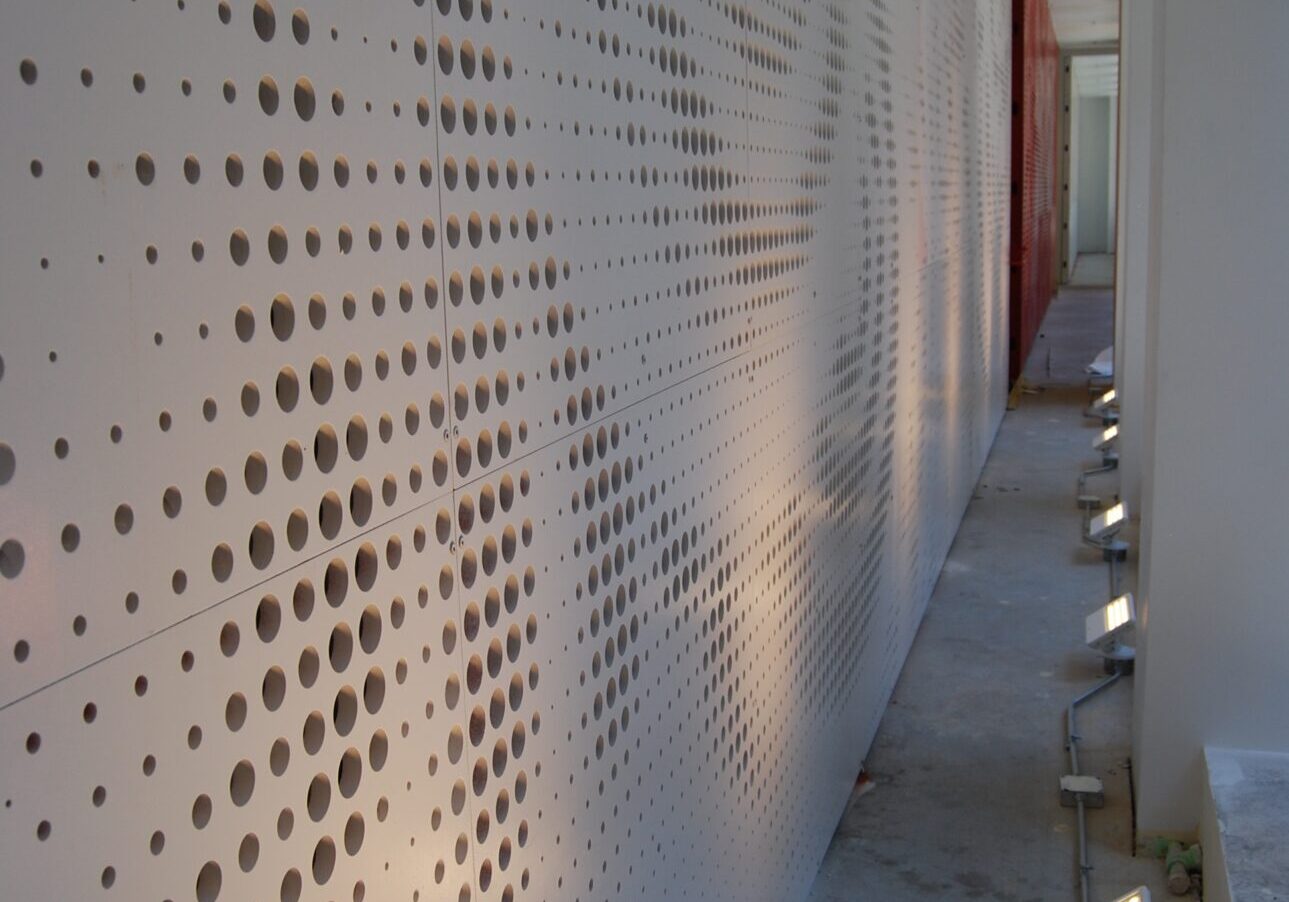
Portfolio continuity requires independence at the specification level. A firm tied to a single manufacturer's product line cannot hold a consistent performance standard across a portfolio, because the manufacturer's catalog is the constraint. Color temperature coherence, uniformity ratios, zone-specific beam distributions, these require selecting the right fixture for each point in the design, not the available fixture.
OSL maintains direct relationships with leading lighting manufacturers across both interior and exterior product lines and specifies from across that field based entirely on what each site's engineering requirements call for. The specification belongs to the project and to the client. It is not tied to any vendor, which means it can be bid competitively, executed by any qualified contractor, and maintained by any future service partner without losing the original design intent.
Professional photometric design consistently eliminates 15 to 25 percent of fixtures from a typical initial vendor proposal, not by compromising light levels, but by placing the right fixture in the correct location with the correct distribution. On existing sites, the poles usually stay where they are, and the same process reduces the number of fixture heads on them, often from four per pole to two. Multiplied across a portfolio, that difference compounds, whatever the setting.
What This Looks Like in Practice
For engineers and architects, OSL operates as a subcontracted design resource that integrates into the existing project team. The starting point is whatever documentation the design team is already producing: site plan PDFs or CAD files for new construction, existing conditions plans for renovation work. OSL delivers photometric drawings, fixture specifications, code compliance documentation, and performance-based specifications formatted to support permitting submissions and internal capital approvals without requiring supplemental engineering work.
For portfolio owners and operators, OSL builds master design specifications that adapt to individual site conditions, interior and exterior alike, while holding consistent performance standards and predictable cost structures across every location. The specification becomes an asset the client owns and carries forward through every retrofit cycle, capital event, and lease renewal that follows.
The engineers and architects who build this kind of partner into their standard practice find that the lighting conversation stops being a loose end and starts being a resolved asset from day one. The clients who have stayed with OSL the longest, some for ten to fifteen years, tend to say the same thing: the early conversations were straightforward and honest, which made every conversation after that easier.
If you are working on a ground-up lighting project, interior or exterior, or managing a portfolio that needs a consistent specification standard, OSL offers a free project review consultation. Send a site plan or describe the current conditions, and we will give you an honest picture of what the project requires.