Continuity with Better Returns for Your Lighting Infrastructure Across Regional or National Sites
For REITs and Portfolio Executives
Across regional and national commercial portfolios, lighting decisions quietly shape operating expense, capital planning, compliance exposure, and the physical presentation of every asset in the portfolio. In most organizations, those decisions are still made one property at a time, a vendor proposal at one site, an emergency fixture swap at another, with no shared standard carrying from one location to the next. The result is rarely a single dramatic failure. It is a slow accumulation of cost, risk, and inconsistency that only becomes visible when someone tries to compare performance across the portfolio and finds there is nothing consistent to compare. The owners and operators who get ahead of this are not spending more on lighting. They have stopped treating lighting as a transaction repeated at every site and started managing it as infrastructure, with the same continuity, intelligence, and accountability applied to any other long-lived asset across a portfolio. That shift, continuity over transaction, is where better returns actually come from.
Why Consolidation Is Changing the Math
Commercial real estate portfolios are operating under different conditions than they were a decade ago. Consolidation has centralized decision-making at the enterprise level, even as the physical assets themselves remain spread across dozens or hundreds of individual sites. Operating expense and capital deployment face more scrutiny than before, from investors, lenders, and increasingly from ESG reporting requirements that did not exist in their current form a few years ago. Tenants, insurers, and regulators expect a level of consistency that a site-by-site approach to lighting cannot reliably deliver.
Lighting sits at the intersection of all of it: cost control, operational reliability, risk mitigation, and asset presentation. Yet most lighting programs are still governed by vendor relationships and purchasing habits built for a simpler environment, one property, one proposal, one decision, repeated independently at every site. That approach does not scale cleanly as a portfolio grows. The gap between how lighting is actually managed and how a modern, consolidated portfolio needs it managed widens with every acquisition, renovation, and lease cycle.
The Hidden Cost of Managing Lighting Site by Site
Lighting decisions are rarely evaluated holistically, which is exactly why their downstream cost is so easy to underestimate. Inconsistent site data and unreliable baselines mean every new project starts closer to a guess than a known quantity. Reactive maintenance and one-off replacements prevent any kind of portfolio-level optimization, because each site is solved in isolation, with no record of what worked, what did not, and why. Vendor oversight becomes fragmented across dozens of relationships instead of one accountable standard, and without a documented baseline, compliance and insurance exposure tend to drift gradually rather than surface all at once.
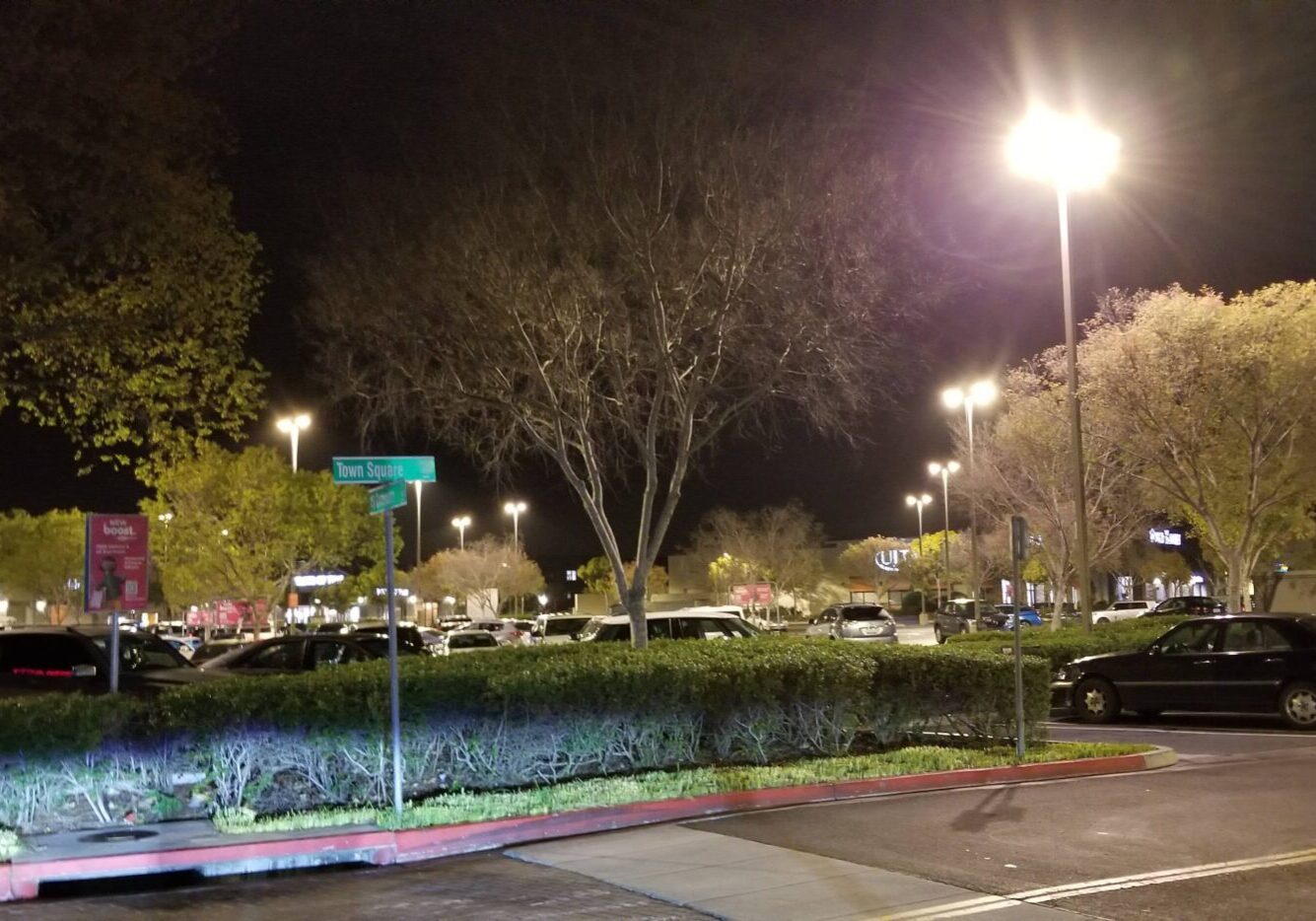

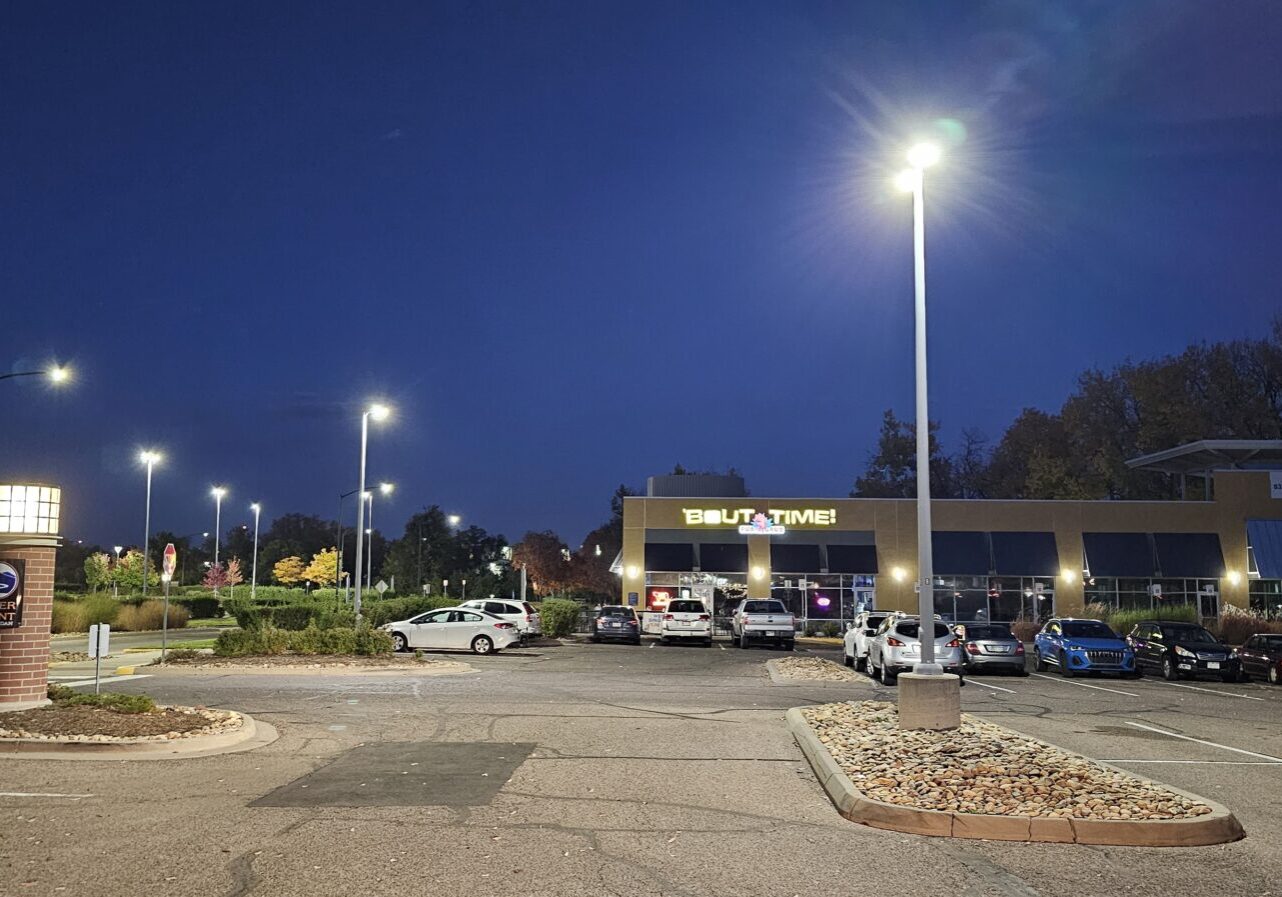
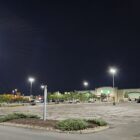
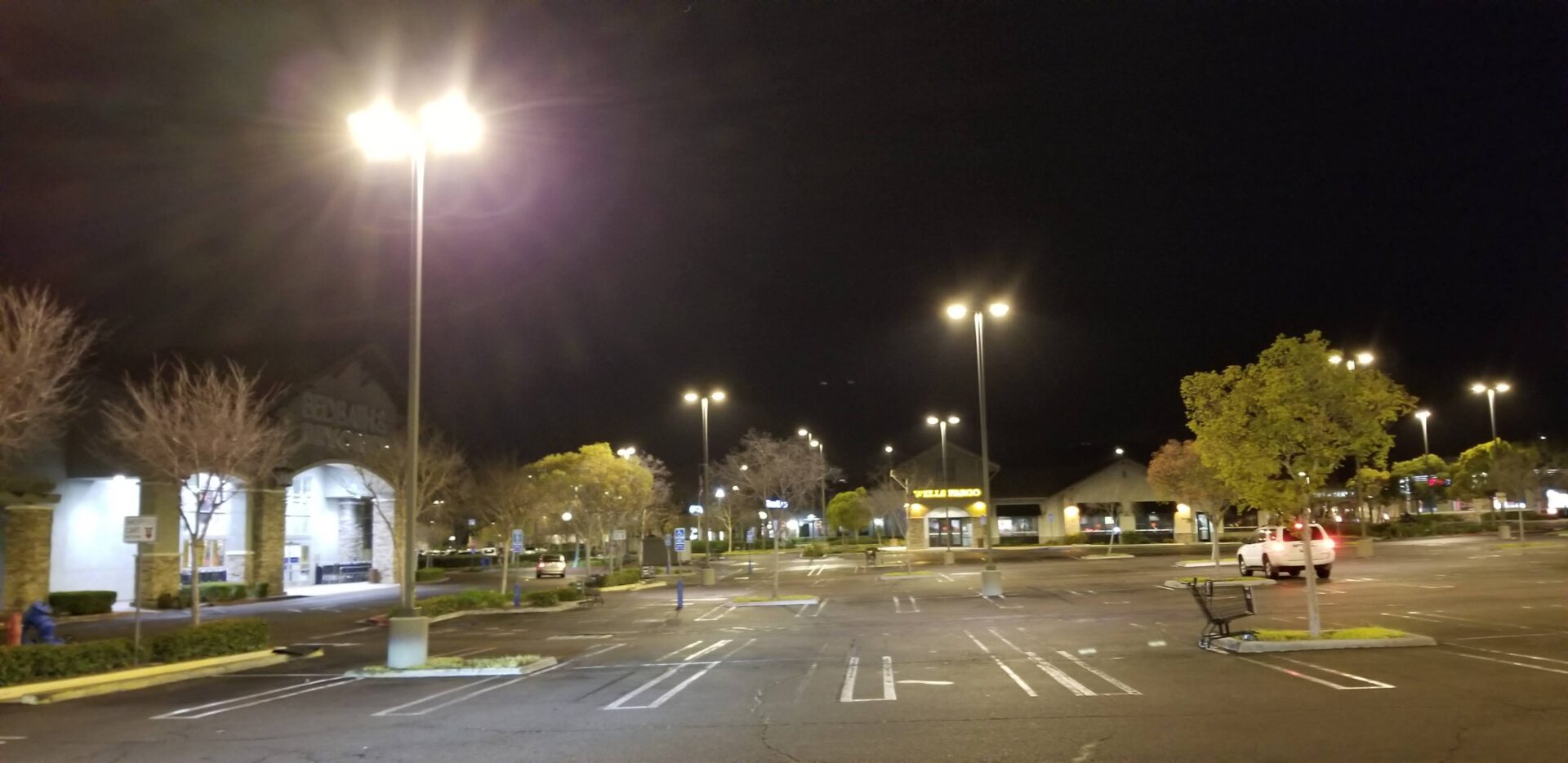
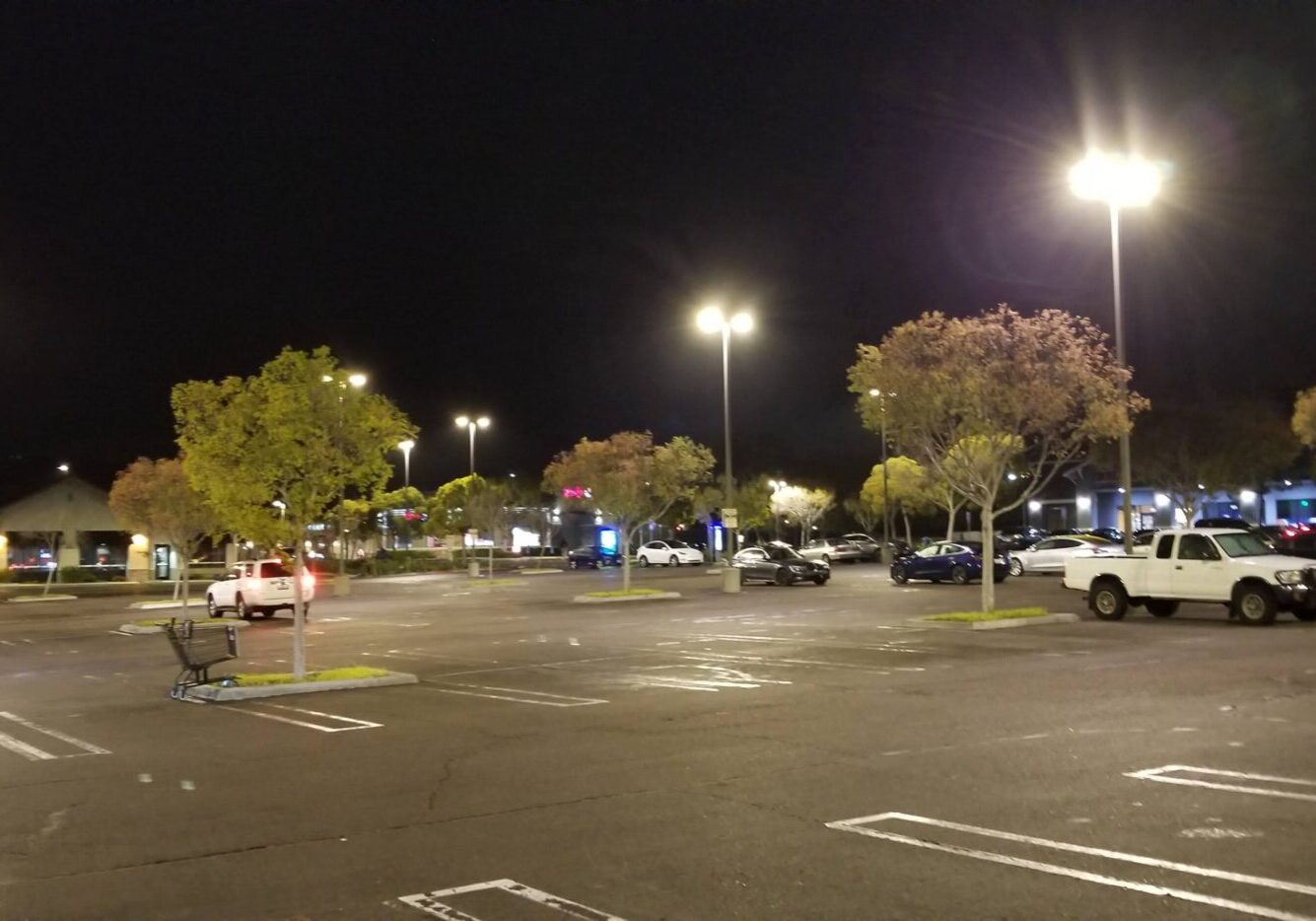
Dark zones and uneven coverage also create real safety and liability exposure. The U.S. Department of Justice identifies parking lots as the third most common location for crime, accounting for 4 to 6 percent of all crimes and 7.3 percent of violent crimes, and well-lit lots see meaningfully less of both. None of these costs show up as a single line item. They compound quietly between inspections, between budget cycles, and between the people who made the original decision and the people now responsible for living with it. The real cost of unmanaged lighting is not the fixture. It is the fragmentation of decisions made independently, site by site, with no continuity between them.
Reframing Lighting as Portfolio Infrastructure
Leading portfolio owners are reframing lighting as long-lived infrastructure rather than a sequence of disconnected projects, and that shift changes what becomes possible. Performance becomes predictable across sites instead of varying by whichever vendor happened to win a given bid. Lifecycle cost drops, not just the upfront price of a single project, because fixture selection, design standards, and maintenance records all follow the same specification instead of resetting at every location. Capital planning becomes clearer, because a portfolio owner working from a consistent baseline can prioritize and budget across sites rather than reacting to whichever property raises an issue first. And vendor transitions, along with the operational friction that comes with them, happen far less often.
Small inefficiencies that would be manageable at a single site repeat and multiply across fifty. What a property manager can absorb informally at one location becomes a material line item across a full portfolio. This is why sophisticated owners increasingly treat lighting not as a procurement function handled by whoever is available, but as an infrastructure system that requires continuity, intelligence, and stewardship over time.
What Continuity Actually Returns
The case for continuity is not theoretical. Across OSL's client portfolio, a continuity-based approach to lighting design has produced $3,429,271 in documented energy cost savings in a single year, eliminating 29,965,595 kWh and preventing 21,059 metric tons of CO₂. Independent research on LED and controls-based retrofits deployed systematically across multiple sites regularly shows energy reductions of 40 to 60 percent, with payback periods often under two years. Professional photometric design, built zone by zone before a single fixture is selected, consistently eliminates 15 to 25 percent of fixtures from a typical initial vendor proposal, not by compromising light levels, but by placing the right fixture in the correct location with the correct distribution. On one project, that process reduced fixture counts from 14 poles to 9, eliminating approximately $50,000 in upfront material and installation cost at a single site. Multiplied across a regional or national portfolio, that kind of difference compounds rather than resets at every new acquisition.
The returns go beyond the energy bill. When lighting decisions are made within a long-term, continuity-based partnership, fewer downstream surprises emerge during due diligence, refinancing, or a capital event. Capital investments compound instead of resetting with every new vendor relationship. Portfolio performance becomes more predictable, which matters as much to lenders and investors as it does to the operations team managing the properties day to day. And internal teams regain the bandwidth that would otherwise go toward managing a different vendor relationship at every site.
How OSL Operationalizes Continuity
OSL structures this work as a continuous value loop: Survey, Design, Installation, and Optimization. Each phase builds on the one before it. Survey establishes reliable baseline intelligence and site-level accuracy across the portfolio. Design translates that intelligence into scalable, portfolio-aware specifications rather than one-off layouts. Installation executes with the same accountability and consistency at every site, coordinated through a network of more than 400 electrical contractors across the lower 48 states. Optimization protects and improves performance over time, rather than treating project completion as the end of the relationship. The loop allows portfolio-level thinking without sacrificing the specific conditions of any individual site.
Who This Is Built For
This approach serves organizations managing multi-site commercial portfolios who value consistency, transparency, and long-term thinking over constant vendor turnover, and who want to reduce operational drag and lifecycle cost rather than simply choose the cheapest bid. It is not the right fit for every property owner, and that is by design. Selectivity is a feature, not a limitation, because long-term results require alignment between the portfolio owner and the partner managing a core piece of its infrastructure.
A Practical Next Step
The question facing portfolio owners today is no longer who can install lighting at the next site. It is who can steward lighting performance across the full life of every asset in the portfolio, and do it with enough continuity that the answer does not change from property to property.
On-Site Lighting & Survey offers a confidential, portfolio-level lighting review for REITs and multi-site operators evaluating whether a continuity-based approach would materially improve cost control, risk management, and long-term performance across their regional or national footprint. Book a conversation with our team to see how this is showing up across your portfolio.
Marshall Tromborg | CEO and President, On-Site Lighting & Survey
Direct: 763-682-7114 | [email protected] | onsitelighting.com
7,200+ projects since 2001. Electrical engineers licensed in all lower 48 states.